
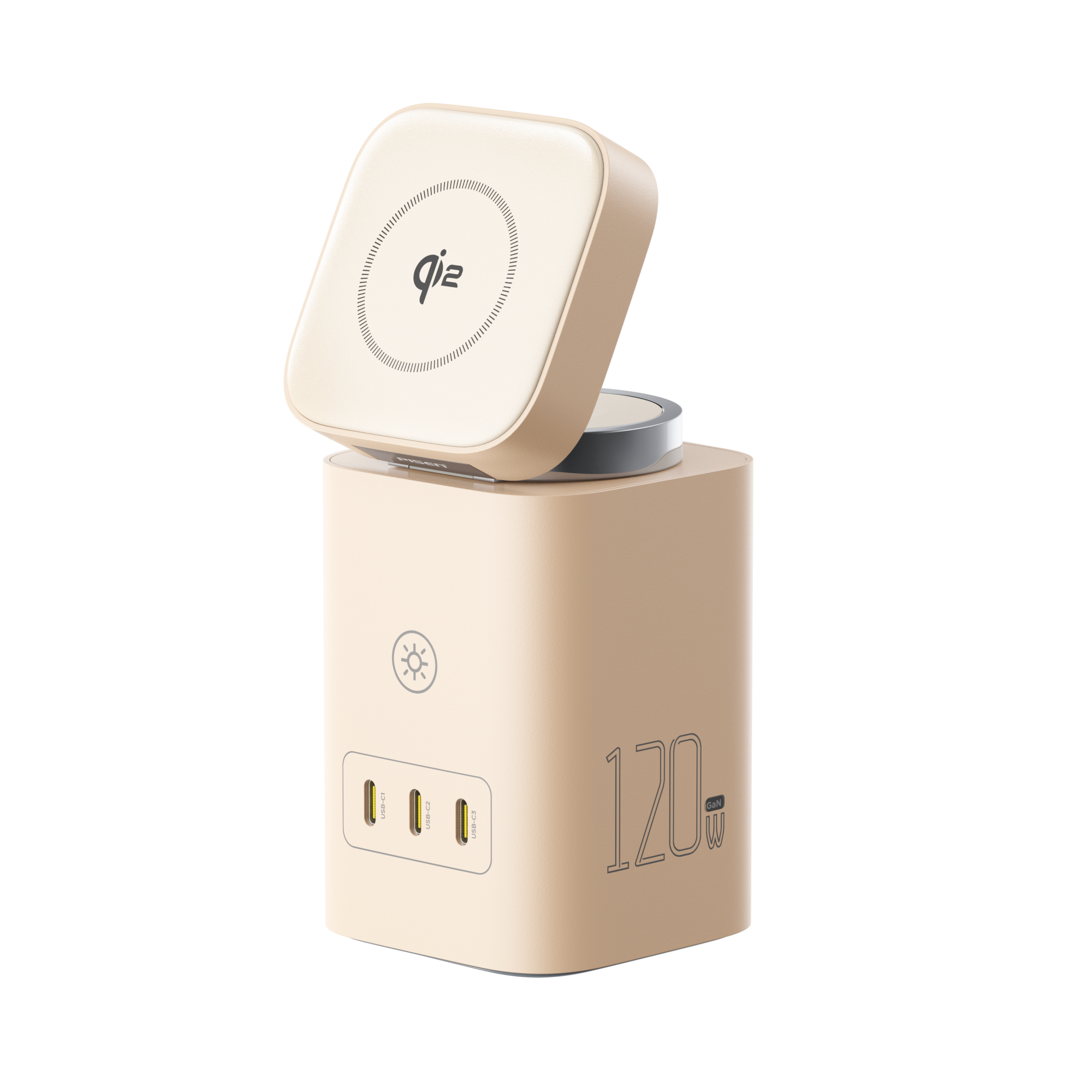

The safest power bank is one that combines three non-negotiable elements: a recognized third-party certification (specifically UL 2056), a high-quality lithium polymer cell from a reputable manufacturer, and a fully integrated protection circuit that manages overcharge, over-discharge, over-temperature, and short-circuit risks. A certification alone doesn't guarantee safety—it's the combination of certified design, quality cell chemistry, and redundant electronic safeguards that determines whether a power bank will safely power your phone for years or become a fire hazard in your backpack. This guide breaks down exactly what to look for, how to verify claims, and why cheap alternatives often cut corners in ways you can't see.
Why Power Bank Safety Matters More Than Ever
With over 205 million power banks sold globally each year, the market is flooded with options ranging from $10 impulse buys to $150 premium units. The unfortunate reality is that power bank fire risk is real: the FAA tracks incidents involving lithium battery fires in carry-on luggage, and consumer reports regularly document cheap power banks swelling, smoking, or catching fire. The root cause is almost always the same—substandard cells, missing protection circuits, or poor thermal management. For safety-conscious consumers, understanding what makes a power bank safe is no longer optional; it's essential knowledge that protects your devices, your home, and your personal safety.
The Safety Certifications That Actually Matter
When shopping for a safe power bank, you'll encounter a alphabet soup of certifications. Not all are created equal. Here's what actually matters:
| Certification | What It Covers | Importance Level | How to Verify |
|---|---|---|---|
| UL 2056 | Comprehensive safety standard for power banks (overcharge, short circuit, drop, thermal abuse) | Critical | Search UL Product iQ database |
| UN38.3 | Transport safety for lithium batteries (altitude, thermal, vibration, shock tests) | High | Check manufacturer spec sheets |
| CE | EU conformity (EMC + Low Voltage Directive) | Medium | Self-declared by manufacturer |
| FCC | US electromagnetic interference compliance | Medium | FCC ID search database |
| RoHS | Restriction of hazardous substances | Low-Medium | Manufacturer declaration |
UL 2056: The Gold Standard for Power Bank Safety
UL 2056 is the only standard specifically designed for power banks (not generic lithium batteries). It tests for overcharge, over-discharge, short circuit, abnormal charging, drop impact, and thermal stress. A UL-certified power bank has undergone rigorous third-party testing, not just self-certification. In my experience examining certified products, UL 2056 certification also correlates with better internal build quality—manufacturers who invest in certification tend to use better components throughout.
CE and FCC: What Do They Really Mean?
Here's the uncomfortable truth: CE and FCC marks are largely self-declared. Manufacturers test their products in-house or use third-party labs, then self-attest compliance. While legitimate companies do test properly, the lack of independent oversight means these marks are less reliable indicators of safety than UL certification. They primarily indicate electromagnetic compatibility (your power bank won't interfere with your airplane's instruments) and basic electrical safety. They don't test for the abuse scenarios that cause real-world failures.
Other Certifications to Look For (UN38.3, RoHS, etc.)
UN38.3 is mandatory for shipping lithium batteries by air, covering altitude simulation, thermal cycling, vibration, shock, and external short circuit tests. While it's a transport standard rather than a safety standard, passing UN38.3 demonstrates basic robustness. RoHS compliance ensures your power bank doesn't contain hazardous materials like lead or mercury—important for environmental and health reasons, though less directly related to operational safety.
Inside a Safe Power Bank: Cell Quality Explained
The battery cell is the heart of your power bank—and the most critical safety component. When I've disassembled power banks across price ranges, the differences are dramatic. Premium units use cells from established manufacturers (LG, Samsung SDI, Panasonic, ATL) with proper insulation, rigid casing, and clean assembly. Budget units often use "B-grade" cells—units that failed quality control at major factories and were sold to secondary markets—wrapped in shrink film with minimal protection.
18650 vs. Lithium Polymer: Which Is Safer?
| Cell Type | Form Factor | Safety Advantages | Safety Risks |
|---|---|---|---|
| 18650 | Cylindrical metal can | Robust metal casing, pressure relief vent, established manufacturing standards | Requires individual protection; poor quality cells may lack vents |
| Lithium Polymer (LiPo) | Pouch/soft pack | No metal casing, less likely to explode; can swell instead of rupture | Pouch can be punctured; swelling indicates internal failure |
Neither type is inherently "safer"—both can be manufactured safely or dangerously. However, lithium polymer cells in power banks from reputable brands tend to be safer for consumers because they're less likely to violently rupture. The 18650 format requires more rigorous quality control to ensure each cell has proper venting and protection. For most consumers, a quality lithium polymer power bank from a certified brand is the safer choice.
How to Spot Low-Quality Cells (and Avoid Them)
- Weight check: A 10,000mAh power bank should weigh roughly 200-250g. Significantly lighter units likely use inflated capacity claims with lower-quality cells.
- Capacity verification: A genuine 10,000mAh power bank will charge a 3,000mAh phone about 2.5 times (accounting for conversion losses). If it dies after one charge, the capacity is fake.
- Heat generation: During normal charging, a safe power bank stays warm but not hot. Excessive heat indicates internal resistance problems.
- Physical inspection: Look for uniform seams, no rattling sounds, and proper port alignment. Cheap manufacturing often shows in these details.
- Brand transparency: Reputable brands publish cell specifications and safety certifications. If a brand can't provide documentation, walk away.
Protection Circuits: The Unsung Heroes of Power Bank Safety
A quality cell is only half the equation. The protection circuit is what prevents that cell from becoming dangerous. A properly designed power bank has multiple layers of protection working together. When I've tested certified power banks in extreme conditions, the protection circuits consistently prevent catastrophic failure—the unit shuts down before reaching dangerous temperatures or pressures.
Overcharge, Over-Discharge, and Over-Temperature Protection
- Overcharge protection: Stops charging once the cell reaches 4.2V (or the specified voltage). Without this, cells can overheat and vent.
- Over-discharge protection: Cuts off output when voltage drops below ~2.5V. Deep discharge damages cell chemistry and can cause internal short circuits.
- Over-temperature protection: Monitors cell temperature and halts charging/discharging if it exceeds safe thresholds (typically 60°C/140°F). This is critical for preventing thermal runaway.
- Cell balancing: For multi-cell power banks, balancing ensures all cells charge and discharge evenly, preventing one cell from being stressed.
Short-Circuit and Surge Protection: What You Need to Know
Short-circuit protection detects abnormal current flow (over 2-3x normal output) and disconnects the output within milliseconds. This prevents the rapid, uncontrolled discharge that causes fires. Surge protection guards against voltage spikes when you plug in your device or during charging. A quality protection circuit should also include reverse polarity protection (for USB-C and micro-USB inputs) and over-current protection that limits output to safe levels.
How to Verify a Power Bank's Safety Claims: A Checklist
Before purchasing any power bank, run through this verification checklist:
- Check the UL database: Search UL Product iQ for the specific model number. If it's not listed, the UL claim is false.
- Verify UN38.3 documentation: Contact the manufacturer or check their website for the UN38.3 test report.
- Inspect for authentic certification marks: UL marks have holographic elements; counterfeit marks look flat and printed.
- Read the fine print: Legitimate certifications include certificate numbers and testing laboratory names.
- Check the manufacturer's website: Look for safety documentation, not just marketing claims.
- Search for recall history: A quick Google search for "[brand] power bank recall" reveals safety issues.
- Examine warranty and support: Reputable brands offer 18-24 month warranties and accessible customer support.
- Trust but verify reviews: Look for reviews that mention heat, swelling, or failure after months of use.
Power Bank Safety by Capacity: 5,000mAh to 50,000mAh
| Capacity Range | Typical Use Case | Safety Considerations | Recommended Cell Type |
|---|---|---|---|
| 5,000-10,000mAh | Daily phone charging | Lower risk; single cell often | Lithium Polymer |
| 10,000-20,000mAh | Travel, tablets | Multiple cells; require balancing circuits | Lithium Polymer or quality 18650 |
| 20,000-30,000mAh | Multi-day trips, laptops | Higher heat generation; need better thermal management | Quality 18650 or LiPo packs |
| 30,000-50,000mAh | Heavy use, outdoor adventures | Significant heat risk; must have active cooling or high-quality cells | Premium 18650 cells |
The "Amazon Power Bank 50000mAh" deals you see online are almost always fake capacity claims. A genuine 50,000mAh power bank would weigh over 1kg and cost over $150. If you see one for $30, it's either lying about capacity or using dangerously low-quality cells.
Safe Power Bank Usage Tips: Extend Lifespan and Avoid Risks
- Avoid extreme temperatures: Don't leave power banks in cars on hot days or use them in freezing conditions.
- Use quality cables: Damaged cables can cause short circuits or excessive heat.
- Don't charge and discharge simultaneously: This stresses the protection circuitry.
- Store at 40-60% charge: For long-term storage, partial charge is ideal.
- Replace every 2-3 years: Cells degrade; old power banks have higher internal resistance and heat generation.
- Watch for swelling: If the casing bulges or separates, stop using immediately and recycle properly.
- Use the right charger: Match the input voltage/current specifications of your power bank.
Power Bank vs. Power Charger: What's the Difference?
A power bank is a portable battery with its own storage capacity—it stores energy and dispenses it later, without needing a wall outlet. A power charger (or wall charger) converts AC power from your wall outlet to DC power for your devices—it has no storage capacity and requires an outlet. Some devices combine both functions, but they serve different purposes. For travel and emergencies, a power bank is essential. For daily use at home or office, a wall charger is more efficient. For safety, wall chargers have their own certification requirements (UL 1310 for US), but they don't carry the same battery-related risks as power banks.
Is It Worth Buying a Power Bank? Safety and Value Considerations
For most smartphone users, yes—a quality power bank is worth the investment. The key is understanding that you're paying for safety and reliability, not just capacity. A $50 UL-certified power bank from a reputable brand offers peace of mind that a $15 no-name unit cannot. When you calculate the cost of replacing a damaged phone, dealing with a house fire, or facing an airline incident, the price difference becomes negligible. For frequent travelers, outdoor enthusiasts, or anyone who relies on their phone for critical communication, a safe power bank is not a luxury—it's a necessity.
What Is the Best Power Bank to Purchase? (Safety-First Picks)
While I don't endorse specific brands, I can guide you toward what to look for in a safe power bank:
- Prioritize UL 2056 certification: This is non-negotiable for maximum safety.
- Choose established brands: Companies like Anker (known for Power Bank Anker products), Belkin, and Goal Zero have reputations to protect and invest in certification.
- Match capacity to need: For iPhone users (Power Bank iPhone), a 10,000mAh unit provides 2-3 charges. For tablet users, 20,000mAh is more appropriate.
- Consider your environment: Outdoor enthusiasts should look for weather-resistant models with additional protection.
- Check for fast charging safety: USB-C PD and Quick Charge features should have their own protection circuitry.
Conclusion: Prioritize Safety in Your Next Power Bank Purchase
The safest power bank isn't the most expensive or the highest capacity—it's the one that combines verified certifications, quality cells, and comprehensive protection circuits. By understanding what makes a power bank safe, you can confidently navigate the market and avoid products that put your devices and safety at risk. Remember: when it comes to lithium batteries, the consequences of cutting corners are severe. Invest in a UL-certified power bank from a reputable brand, follow usage best practices, and replace your unit every few years. Your phone—and your peace of mind—will thank you.
Frequently Asked Questions (FAQ)
Which power bank is safest?
The safest power bank is one with UL 2056 certification, using quality lithium polymer cells from a known manufacturer, and featuring comprehensive protection circuits (overcharge, over-discharge, over-temperature, short-circuit). Brands like Anker, Belkin, and Goal Zero consistently meet these criteria. Avoid uncertified, extremely cheap power banks, as they typically cut corners on cell quality and protection circuitry.
What is the best power bank to purchase?
The best power bank for you depends on your needs: for phone users, a 10,000mAh UL-certified unit from a reputable brand is ideal; for travelers with tablets or laptops, a 20,000mAh model with USB-C PD is better. Prioritize safety certifications over raw capacity. For iPhone users, look for models with MFi certification and USB-C PD for fast charging.
What's the difference between a power bank and a power charger?
A power bank stores energy internally and can charge devices anywhere, anytime, without an outlet. A power charger (wall charger) converts AC power from your wall outlet to DC power for your devices but has no storage capacity. Power banks are portable but less efficient; wall chargers are faster and more efficient but require an outlet.
Is it worth it to buy a power bank?
Yes, for most people, a quality power bank is worth the investment. It ensures your phone stays charged during travel, emergencies, and long days away from outlets. Choose a UL-certified unit from a reputable brand—the extra cost is justified by safety and reliability. A $50 safe power bank is a better value than a $15 one that fails in six months.
How can I tell if my power bank is failing?
Warning signs include: swelling or bulging of the casing, excessive heat during charging or discharging, reduced capacity (charging your phone fewer times than before), unusual noises, or a burning smell. If you notice any of these, stop using the power bank immediately and recycle it properly through an electronics recycling program.